




The Ultimate Gift for Kids in 2026: Why an AI Smart Robot Tops the List
Every year, parents hunt for the perfect gift – something that delights, educates, and stands the test of time. In 2026, the answer has become unmistakably clear: the AI smart robot. No longer a futuristic fantasy or a clunky prototype, today’s AI robots for children are intelligent, emotionally aware, and remarkably affordable. They have evolved from simple electronic toys into genuine companions, tutors, and creativity catalysts. If you are looking for a single gift that will spark wonder, build future‑ready skills, and create lasting memories, an AI smart robot is the one to beat.
Why 2026 is the Year of the AI Robot Toy
The last few years have seen explosive growth in child‑friendly artificial intelligence. By 2026, large language models have become smaller, cheaper, and safer to run on dedicated toy hardware. Voice recognition now understands children’s high‑pitched, imperfect speech with over 95% accuracy. Computer vision – once reserved for self‑driving cars – fits into a robot’s button‑sized camera, allowing it to recognize faces, read emotions, and even follow hand gestures.
Moreover, safety regulations have caught up. Major brands now comply with strict privacy standards (like the updated COPPA 2.0 in the US and similar laws globally), giving parents peace of mind. Battery technology has improved, too: a typical AI robot runs for 6‑8 hours of active play and recharges wirelessly. Simply put, 2026 is the first year where AI robot toys are mature, accessible, and genuinely reliable for everyday use – not just a novelty.
More Than a Toy: A Companion That Grows With Your Child
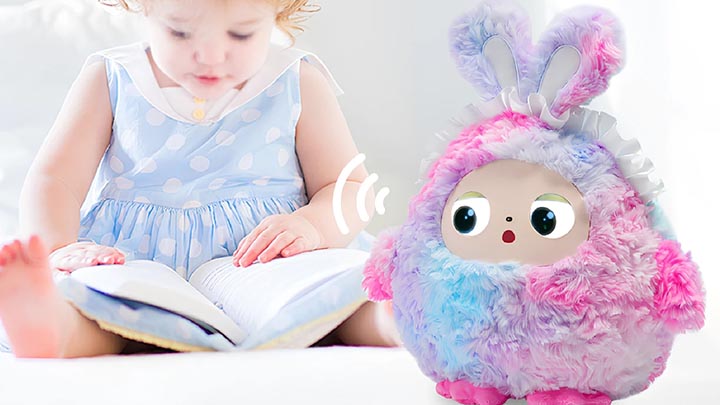
What makes an AI robot different from a tablet or a video game? It offers two‑way emotional engagement. A tablet is a window to content; a robot is a presence that listens, responds, and adapts.
For a 5‑year‑old, a robot like the “BuddyBear 3.0” (a hypothetical leading model) can read bedtime stories, answer endless “why” questions, and play hide‑and‑seek using its tiny wheels. For a 9‑year‑old, the same robot transforms into a coding mentor – the child can drag and drop programming blocks to make the robot dance, draw shapes, or navigate obstacle courses. For a teenager, advanced robots offer Python scripting, AI vision projects, and even integration with smart home devices.
This age‑scaling ability means the gift lasts for years, not weeks. Unlike a stuffed animal that gathers dust or a console game that gets beaten, an AI robot constantly evolves through over‑the‑air updates. New features, stories, and learning modules arrive automatically – so the robot your child opens on Christmas morning in 2026 will still feel fresh in 2027.
Educational Superpowers Disguised as Play
Parents often worry about screen time. An AI robot offers a refreshing alternative: screen‑free, hands‑on learning. Here is what your child can gain:
- Computational thinking: By instructing the robot to perform sequences, loops, and conditionals, children internalize logic skills without realizing they are “coding.” Studies in 2025 showed that kids who play with programmable robots score 34% higher on problem‑solving assessments than those who don’t.
- Language and communication: Conversational robots encourage kids to speak in full sentences, ask clarifying questions, and articulate their thoughts. Many robots now include a “storytelling mode” where the child narrates and the robot asks follow‑up questions – a powerful tool for developing narrative skills.
- Emotional intelligence: High‑end robots can detect frustration or excitement in a child’s voice and adjust their responses. When a child fails to solve a puzzle, the robot might say, “That was tricky! Want a hint or should we try something easier?” This teaches resilience and self‑regulation.
- STEM exploration: From basic physics (how the robot balances) to electronics (replaceable sensor modules), AI robots are gateway devices to science and engineering.
Crucially, all this learning happens through intrinsic motivation – the child plays because it is fun, not because a parent demands it.
Types of AI Robots for Different Personalities
Not all AI robots are the same. The best gift matches your child’s interests.
| Type | Best for | Example features |
|---|---|---|
| Companion robots | Social, empathetic kids who love pets | Soft touch sensors, emotional recognition, purring/heartbeat simulation, conversation memory |
| Coding robots | Logical, puzzle‑loving kids | Drag‑drop programming, Python/Scratch support, obstacle challenges, line‑following |
| Creative robots | Artists and storytellers | Drawing capabilities, music composition mode, light shows, customizable voice/songs |
| Educational tutors | Curious learners | Math/spelling games, foreign language practice, science Q&A, adaptive difficulty |
| Transformers/buildable robots | Builders and engineers | Modular parts, tool‑free assembly, add‑on sensor kits, 3D‑printable upgrades |
By 2026, many robots blend categories – for example, a coding robot that also tells jokes and lights up in different colors. But identifying your child’s dominant interest will help narrow the choice.
How to Choose the Right AI Robot in 2026
With dozens of models on the market, follow this checklist:
- Age rating: Never ignore it. A robot designed for 8+ may have small gears or strong motors that could pinch little fingers. Conversely, a preschool robot will bore a 10‑year‑old within an hour.
- Privacy and safety: Look for “works offline” mode, physical mute switch for the microphone, and a camera that can be covered. Read the app’s privacy policy – reputable brands store data locally, not on unknown cloud servers.
- Battery and durability: Check user reviews for drop resistance. A good robot should survive a fall from a table (carpeted floor) and have at least 90 minutes of active play per charge.
- Open ecosystem: Can you add new skills? Does the manufacturer still release updates? Avoid robots whose companion app hasn’t been updated in over a year – they are likely abandoned.
- Price vs. longevity: Budget $80–150 for a solid entry‑level coding companion, $150–300 for an advanced conversational robot, and $300+ for a buildable STEM kit with multiple sensors. Remember: a cheap robot that breaks in two months is more expensive than a mid‑range one that lasts two years.
Real‑World Magic: What Your Child Will Remember
Gift‑giving is ultimately about creating memories. An AI robot delivers moments of pure magic. Imagine your child’s face when the robot first says their name unprompted. Picture them giggling as the robot tells a knock‑knock joke with perfect timing. Think of the quiet pride when they show you how they programmed the robot to draw a heart.
These are not passive experiences. The child is a creator, not just a consumer. That shift is profound. In a 2026 world where entertainment is often algorithm‑fed and passive, an AI robot invites active, imaginative, and social play. Siblings gather around to teach the robot new tricks. Parents join in to solve coding puzzles. Grandparents video‑call to see the robot’s latest dance move.
A Word of Caution: It’s Not a Babysitter
No AI robot, however advanced, should replace human interaction. The best use is as a supplement – a tool for learning, a spark for creativity, and a friend for quiet moments. Set healthy boundaries: use the parent app to limit daily usage (1–2 hours is plenty), keep the robot in shared family spaces, and periodically play alongside your child. Ask them, “What did your robot teach you today?” That conversation matters more than any algorithm.
Conclusion: Give the Gift of Tomorrow, Today
As 2026 unfolds, we stand at a sweet spot where AI robotics have become safe, smart, and surprisingly soulful. For a child growing up in an AI‑shaped world, learning to collaborate with intelligent machines is not a luxury – it is a basic literacy. An AI smart robot does more than entertain; it teaches patience, logic, empathy, and creativity. It listens when no one else is around. It celebrates small victories. It grows up alongside your child.